Ginkgo Biloba Seamless Patterns: A Versatile Design Resource for Creatives
For designers, illustrators, and product creators, the search for distinctive, reusable pattern assets often leads to a crossroads. You need something that feels organic yet precise, timeless yet adaptable. Ginkgo biloba seamless patterns offer a compelling answer, combining the natural elegance of the ginkgo leaf with the technical convenience of ready-to-use vector and raster files. This article evaluates what these patterns actually deliver, who they serve best, and where you might want to consider alternatives.
What Are Ginkgo Biloba Seamless Patterns?
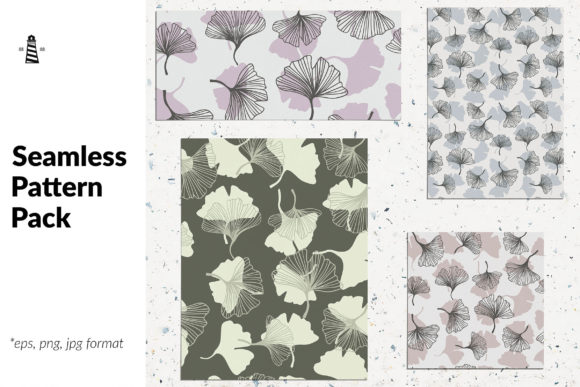
Ginkgo biloba seamless patterns are repeating design motifs built around the distinctive fan-shaped leaves of the ginkgo tree. In this particular offering, you receive a set of eight unique, hand-drawn patterns, carefully crafted in vector art style. Each pattern is supplied in multiple formats: EPS and AI for editable vector work, plus PNG and JPG at 12 x 12 inches with 300 dpi resolution for immediate raster use. The transparent background on the PNG files adds further flexibility for layering and compositing. The result is a collection that aims to bridge the gap between organic hand-drawn aesthetics and the precision demands of modern digital design.
The patterns themselves are described as highly detailed and carefully hand drawn, which distinguishes them from simpler, more geometric repeats. The ginkgo leaf motif naturally lends itself to flowing, rhythmical arrangements, and the level of detail here suggests a focus on texture, vein structure, and subtle variation across the repeat. This is not a basic polka dot or stripe; it is an intentional design choice that brings a botanical, almost antique quality to any surface it adorns.
Why Consider Ginkgo Biloba Patterns for Your Project?
Interest in ginkgo biloba seamless patterns typically arises from a desire for natural, organic motifs that carry symbolic weight. The ginkgo leaf is associated with resilience, longevity, and beauty, making it a meaningful choice for products that aim to convey those values. If you are working on projects where texture and detail matter more than flat, minimalist graphics, these patterns provide a rich foundation.
Another reason to evaluate this set is the convenience of having eight distinct variations. A single pattern can feel limiting when you are building a cohesive collection of products. Having eight options allows you to mix and match for different product lines, seasonal releases, or client preferences, all while maintaining a consistent botanical theme. The inclusion of both vector and raster formats means you can use the same pattern for a large-format wallpaper and a small greeting card without resolution concerns.
Key Benefits Worth Weighing
- Format versatility: EPS and AI files preserve editability in Adobe Illustrator and other vector software. PNG and JPG at 300 dpi give you print-ready raster options immediately. This reduces the friction of converting between formats.
- High resolution for print: At 12 x 12 inches and 300 dpi, the raster files are suitable for professional printing on textiles, paper goods, and packaging. You can scale them down without quality loss, and the vector files allow unlimited scaling upward.
- Transparent backgrounds: The PNG files with transparency make it simple to place the pattern over colored backgrounds, photographs, or other design elements without tedious masking work.
- Hand-drawn aesthetic: Unlike purely digital-generated patterns, these carry the subtle imperfections and organic flow of hand drawing, which adds warmth and authenticity to your projects.
- Consistent theme across variations: All eight patterns share the ginkgo motif, so they work together harmoniously, yet each offers a distinct layout and density, giving you flexibility within a coherent visual language.
Tradeoffs and Practical Considerations
Every design resource comes with tradeoffs, and ginkgo biloba seamless patterns are no exception. The level of detail that makes these patterns visually rich also means they can be visually busy in small-scale applications. If you are designing for a tiny gift tag or a very small product label, the complexity of the leaf structures might read as clutter rather than elegance. In those cases, a simpler, more abstract pattern might communicate more clearly.
Another consideration is file size. High-resolution 300 dpi images at 12 x 12 inches are large files, especially for the PNG variants. If you are working on a web project where load speed matters, you will likely need to compress or downsample these images. The vector files, while infinitely scalable, require vector editing software to modify, which means they are less accessible to designers who primarily work in raster-based programs.
Additionally, the botanical specificity of ginkgo leaves may not suit every brand or project. If your visual identity leans toward geometric, modern, or completely abstract motifs, a ginkgo pattern will feel out of place. It is a strong thematic choice, but it is not a neutral one. You are committing to a natural, somewhat traditional aesthetic, which could limit certain applications.
Where Ginkgo Biloba Seamless Patterns Shine
These patterns are a particularly strong fit for applications where texture and natural themes are assets rather than distractions. Consider these use cases:
- Textiles and fabric design: The flowing, organic repeat of ginkgo leaves works beautifully on apparel, scarves, upholstery, and home linens. The high resolution ensures crisp printing on fabric.
- Wallpapers and surface design: Whether for digital mockups or actual wallpaper production, the seamless repeat and intricate detail create a sophisticated, nature-inspired backdrop.
- Gift papers and wrapping: The elegance of ginkgo motifs elevates gift wrap, making it feel more curated and special than generic patterns.
- Greeting cards and invitations: For botanical-themed events, weddings, or nature-inspired correspondence, these patterns provide a ready-made design foundation that looks handcrafted.
- Web page backgrounds: When used in moderation, the transparent PNG files can add subtle depth to website headers or section backgrounds, especially on nature, wellness, or lifestyle brands.
When Alternatives Might Serve You Better
No single design resource fits every need. You might want to look elsewhere if any of the following apply to your project:
- You need minimalist or geometric patterns. Ginkgo leaves are organic and detailed. If your brand aesthetic is clean, minimalist, or strictly geometric, these patterns will feel out of sync.
- Your project requires very small repeats. For business cards, small icons, or tiny labels, the complexity of these patterns may not read well at small sizes. A simpler motif would be more effective.
- You need a broader range of motifs. If you are designing a collection that needs multiple plant species, seasonal variety, or abstract shapes, limiting yourself to ginkgo leaves alone reduces your options.
- Budget is a primary concern. While this set offers eight patterns in multiple formats, it is a premium product compared to free or lower-cost pattern libraries. If your project is low-budget or one-off, you may find suitable alternatives elsewhere.
- You require exclusive or custom designs. Because these are pre-made patterns, other designers may use the same set for their projects. If exclusivity is critical for your brand, commissioning a custom pattern would be a better investment.
Practical Decision-Making Insights
Evaluating whether ginkgo biloba seamless patterns align with your goals starts with a clear understanding of your project requirements. Begin by considering the scale of your application. If you are designing for large surfaces like wallpaper or fabric, the detail and resolution are clear advantages. For small or digital-only applications, test a sample at the intended size to see if the pattern remains legible and attractive.
Next, assess your technical workflow. If you primarily work in vector software like Adobe Illustrator, the EPS and AI files will integrate seamlessly into your process. If you work in raster-based tools like Photoshop or Procreate, the high-res PNG files are immediately usable, but you will not have the flexibility to edit individual elements. Knowing which format you will actually use helps you judge whether the multi-format offering is a genuine benefit or just nice-to-have.
Also consider the thematic fit. Ginkgo leaves carry specific connotations: endurance, duality (from the leaf's biloba shape), and natural beauty. These associations can be a powerful addition to your design narrative, but only if they align with your brand or project story. If the theme feels forced, the pattern will never look quite right regardless of its technical quality.
Finally, think about variety. With eight unique patterns, you have room to choose different densities and layouts for different products. Look through the full set to see if there is enough contrast between patterns to meet your needs. If all eight feel too similar in density or mood, you may need to supplement with other resources. If they offer genuine variety, the set becomes much more valuable.
Final Considerations Before Choosing
Ginkgo biloba seamless patterns represent a thoughtful intersection of natural art and practical design engineering. The hand-drawn quality gives them a warmth that purely digital patterns often lack, while the multiple formats ensure they can move seamlessly between vector editing, raster compositing, and final print or web output. For designers working on botanical-themed products, nature-inspired branding, or any project that benefits from organic texture, this set offers a ready-made foundation that saves hours of pattern creation work.
However, the same qualities that make these patterns appealing also define their limitations. The level of detail requires thoughtful scaling. The botanical specificity narrows the range of suitable projects. And the cost, while reasonable for a multi-format set, may not fit every budget. By weighing these factors against your specific use case, you can make an informed decision that either embraces the rich potential of ginkgo patterns or points you toward a simpler, more neutral, or more exclusive alternative.
If you have questions about how these patterns will work for your particular project, reaching out to the seller with specifics about your intended use, scale, and software environment can clarify whether this collection is the right fit. Ultimately, the value of any design resource lies not in its features alone, but in how well it serves your unique creative goals.